Early menopause affects approximately 5% of women, yet many people assume the timing of menopause is determined entirely by genetics. While family history certainly plays an important role, research has shown that lifestyle habits and environmental exposures may also influence when menopause begins.
When I was in school, I was taught that the average age of menopause was around 51–52 years and that most women “follow their mothers.” While there is truth to that, I later learned the story is much more complex. Researchers have identified several modifiable factors that may increase the likelihood of entering menopause earlier than expected.
Below are four factors that have been associated with an increased risk of early menopause.
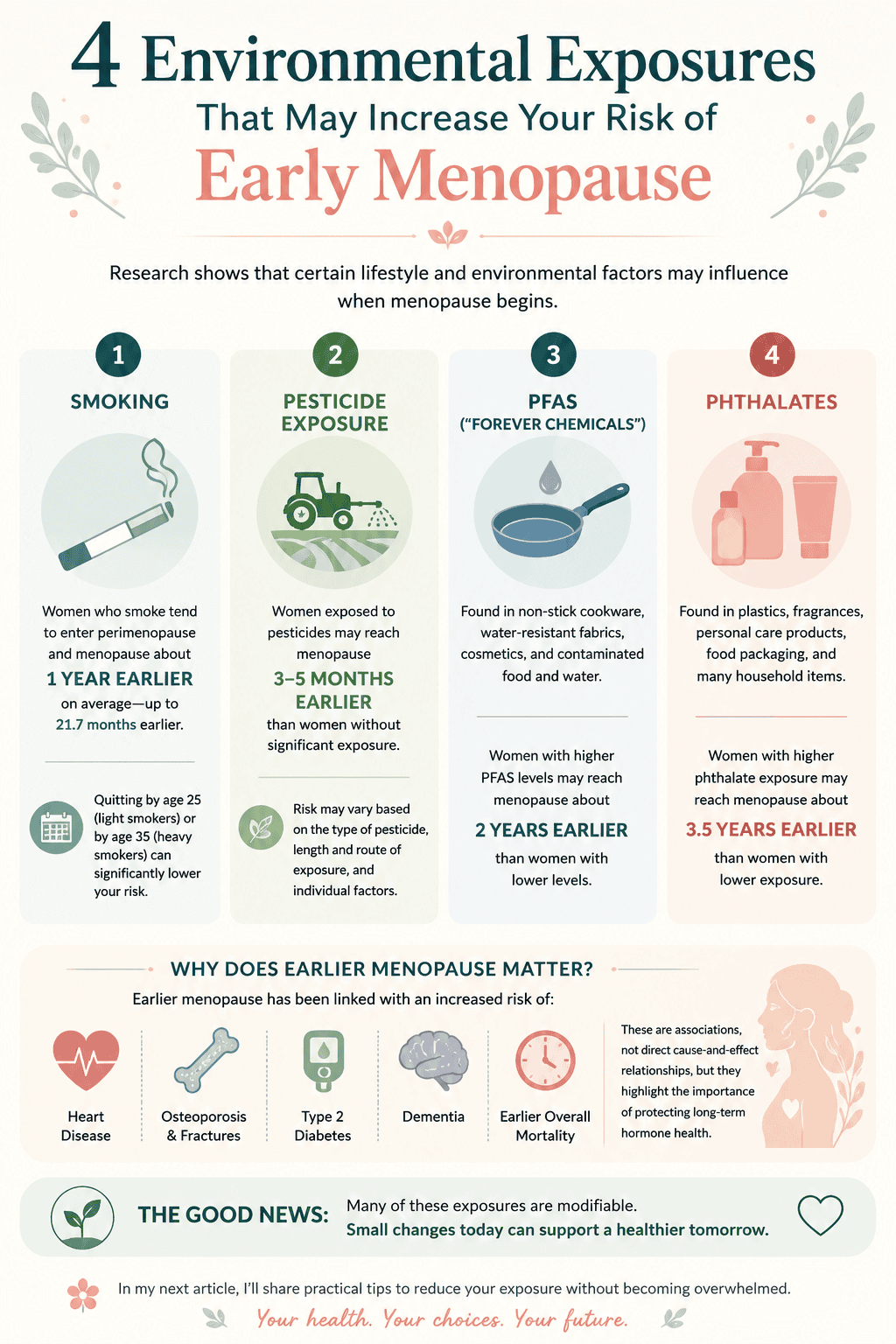
1. Smoking
It probably isn’t surprising that smoking made this list. Most people associate smoking with lung disease, heart disease, and cancer, but it can also affect ovarian function. Cigarette smoke contains thousands of chemicals that increase oxidative stress and can accelerate the loss of ovarian follicles.
Studies have found that women who smoke tend to enter both perimenopause and menopause earlier than nonsmokers—on average about one year earlier, with some studies reporting differences of up to 21.7 months. The greater a woman’s lifetime smoking exposure, the earlier menopause tends to occur.
The good news is that quitting matters. Women who smoked fewer than 10 cigarettes per day and quit by age 25 appeared to eliminate much of this increased risk. Even among heavier smokers (more than 10 cigarettes per day), quitting by age 35 significantly reduced the risk of earlier menopause.[1]
2. Pesticide Exposure
Some pesticides act as endocrine disruptors, interfering with estrogen signaling. Women with occupational or environmental exposure to pesticides have been shown to reach menopause approximately 3–5 months earlier than women without significant exposure.
Researchers believe the degree of risk likely depends on the specific pesticide, duration of exposure, route of exposure, and individual susceptibility.[2]
3. PFAS (“Forever Chemicals”)
PFAS (per- and polyfluoroalkyl substances) are often called forever chemicals because they break down extremely slowly in both the environment and the human body. PFAS can accumulate in the body over time and may interfere with hormone production and ovarian function.
These chemicals are commonly found in non-stick cookware, water-resistant clothing, stain-resistant fabrics, some cosmetics, and contaminated food and drinking water.
Beyond their known links to certain cancers and immune system effects, research suggests that women with higher PFAS levels may experience menopause approximately two years earlier than women with lower levels.[2]
4. Phthalates
Phthalates are chemicals used to make plastics more flexible and durable. They’re also commonly found in fragrances, cosmetics, personal care products, food packaging, and many household items.
Phthalates are endocrine-disrupting chemicals that may affect ovarian reserve and estrogen production.Women with higher phthalate exposure have been shown to experience menopause an average of 3.5 years earlier than women with lower exposure levels.[2]
Why Early Menopause Matters
Earlier menopause isn’t simply about periods ending sooner.
Research has linked earlier menopause with an increased risk of:
Cardiovascular disease
Osteoporosis and fractures
Type 2 diabetes
Dementia
Earlier overall mortality
These studies show associations rather than direct cause-and-effect relationships. However, they reinforce the importance of protecting long-term hormone health whenever possible.
Can You Reduce Your Risk of Early Menopause?
Although you can’t change your genetics, many of the factors associated with early menopause are modifiable. Quitting smoking, reducing exposure to endocrine-disrupting chemicals, and making small lifestyle changes may help support long-term hormone health.
It’s important to remember that no one develops early menopause because of a single exposure. Rather, hormone health is influenced by genetics, age, lifestyle, environmental factors, and overall health. The goal isn’t perfection—it’s reducing unnecessary exposures where practical.
In my next article, I’ll share simple, evidence-based ways to reduce your exposure to endocrine-disrupting chemicals without becoming overwhelmed or feeling like you need to replace everything in your home.
If you’re experiencing symptoms of perimenopause, have concerns about your hormone health, or have a family history of early menopause, schedule an appointment with Wible Wellness. Together we can develop a personalized plan that supports your health now and for years to come.
- Gold EB. The timing of the age at which natural menopause occurs. Obstet Gynecol Clin North Am. 2011;38:425–440. doi: 10.1016/j.ogc.2011.05.002
- Age at Natural Menopause in Women With a History of Chronic Diseases-a Population-Based Cohort Study.Maturitas. 2022. Amiri M, Rahmati M, Farahmand M, Azizi F, Tehrani FR.
Disclaimer: This post is for educational purposes only and does not constitute direct medical advice. Always consult your healthcare provider regarding personal symptoms.