Suspecting a cause and actually confirming one are two different things. Iron deficiency, thyroid dysfunction, a hormonal shift, straightforward female pattern hair loss — you might already have a guess after the last few posts, but a guess isn’t a diagnosis. A hair loss workup is what turns one into the other.
A good hair loss workup answers a more useful question than “am I losing hair“: what’s actually happening, and is there something treatable behind it? There isn’t one universal list of tests every woman needs — the right testing depends on whether you’re dealing with shedding, gradual thinning, breakage, a changing hairline, scalp symptoms, or some combination of those. That’s why I don’t think of a hair loss workup as ordering every possible lab. It’s about matching the testing to the story.
If you’re ready to stop guessing, you can schedule a personalized evaluation with Wible Wellness — we’ll review your symptoms, timeline, medications, hormones, nutrition, previous labs, and hair-loss pattern to figure out what testing actually makes sense for you.
The Standard Hair Loss Workup
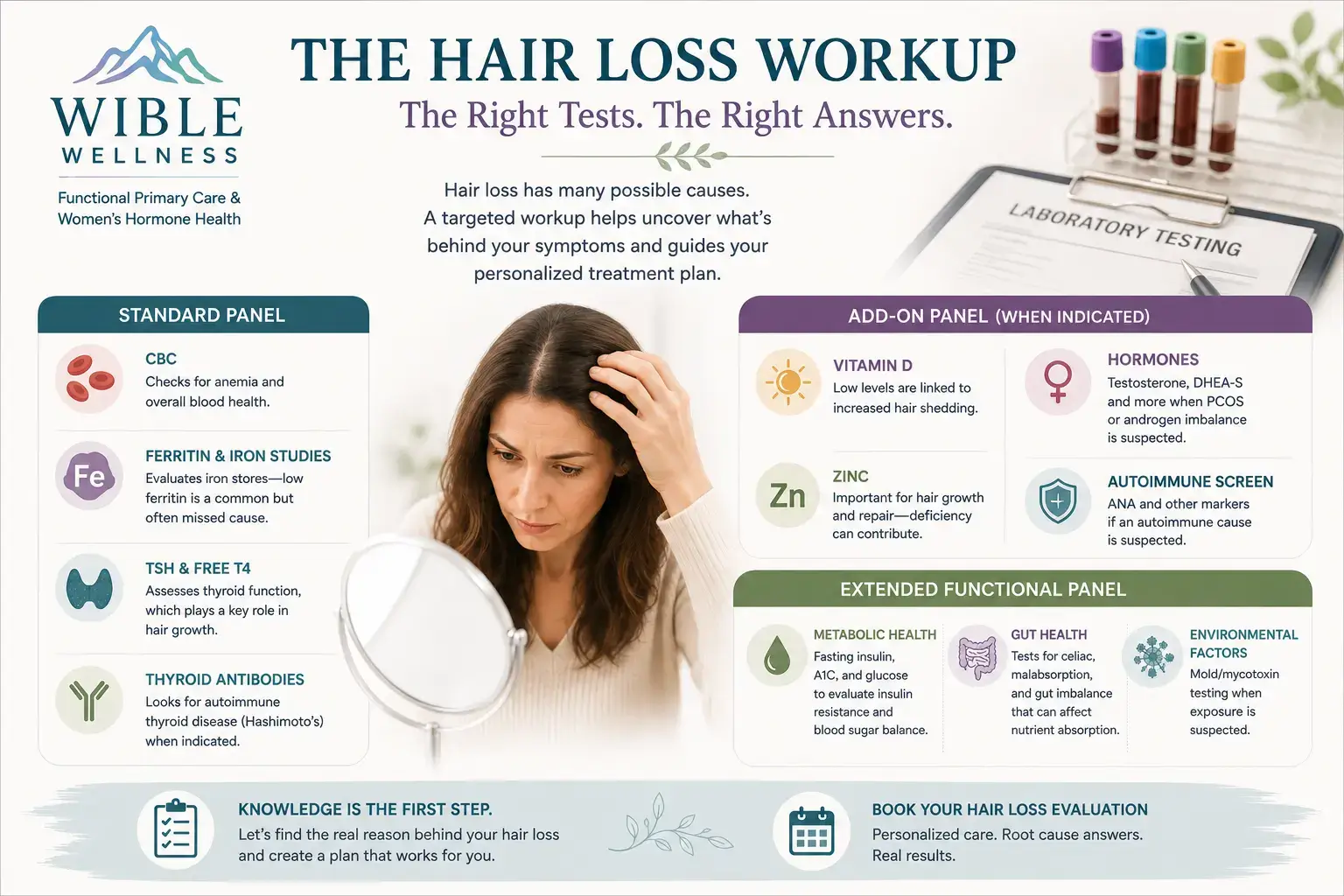
A few tests come up again and again when a woman has unexplained diffuse hair loss.
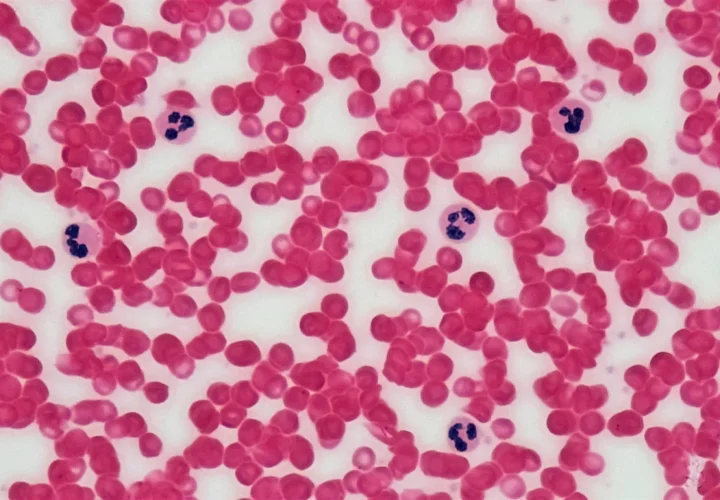
CBC. A complete blood count is the basic starting point. It can identify anemia, which matters if you have heavy menstrual bleeding, a history of iron deficiency, restrictive eating, or another reason you might be losing or not replacing iron (Trost et al., Journal of the American Academy of Dermatology, 2006). A normal hemoglobin doesn’t automatically mean your iron stores are ideal, though — that’s one reason ferritin gets its own place in the evaluation.
Ferritin and iron studies. Ferritin tells us about stored iron; depending on the situation, a full iron panel might also include serum iron, TIBC or transferrin, and transferrin saturation (Trost et al., Journal of the American Academy of Dermatology, 2006). This is one of the more commonly ordered pieces of a hair loss workup, particularly when the pattern suggests telogen effluvium or there are risk factors for iron deficiency (Mirmirani & Fu, JAMA, 2021). Studies of women with diffuse hair loss have found associations with lower ferritin and iron deficiency, though the relationship isn’t as simple as one magic cutoff number — there’s no universally accepted ferritin level that guarantees optimal hair growth (Redler et al., Experimental Dermatology, 2017).
You’ll sometimes see 70 ng/mL cited online as the number every woman with hair loss needs. That figure comes from an older paper that proposed it as an “optimal” level, and it’s been picked up widely in integrative and functional medicine settings — but it isn’t a universally accepted medical threshold, and later research has produced mixed results (Redler et al., Experimental Dermatology, 2017; Trost et al., Journal of the American Academy of Dermatology, 2006). So rather than treating 70 as a magic number, I look at ferritin in context: symptoms, menstrual blood loss, diet, CBC, iron saturation, inflammation, and the overall hair-loss pattern.
TSH and free T4. Thyroid dysfunction can contribute to diffuse hair shedding, so thyroid testing gets considered whenever the cause isn’t obvious (Mirmirani & Fu, JAMA, 2021). For most people, TSH and free T4 provide the core assessment — free T4 shows the amount of circulating thyroid hormone available to your tissues. Free T3 is sometimes useful but not automatically necessary for every person with hair loss; the American Thyroid Association notes that T3 testing generally isn’t helpful for diagnosing hypothyroidism, since T3 often stays within the reference range in hypothyroidism and free T3 immunoassays are less reliable (Van Uytfanghe et al., Thyroid, 2023; Chaker & Papaleontiou, JAMA, 2025).
Thyroid antibodies. If your history or symptoms raise concern for autoimmune thyroid disease, antibodies — commonly TPO and thyroglobulin — can add another piece of the puzzle. They help identify autoimmune thyroid disease like Hashimoto’s, but they don’t tell us how well your thyroid is actually functioning; TSH and free T4 remain the primary measures of that. Thyroid antibodies aren’t something everyone with hair loss needs by default — they’re most useful when there’s a specific reason to suspect thyroid autoimmunity, and antibody positivity occurs in 5–20% of people without hypothyroidism (Chaker & Papaleontiou, JAMA, 2025).
The Add-On Panel: When More Testing Makes Sense
Once the basic hair loss workup is complete, additional testing should be driven by your history, not automatically added to everyone’s order.
Vitamin D is sometimes checked in women with diffuse hair loss, particularly when other deficiency risk factors are present. Research shows an association between lower vitamin D and some forms of nonscarring hair loss, but a low level isn’t automatically the explanation — if you’re deficient, correcting it is reasonable for overall health, though whether supplementation alone restores hair is a separate question (Drake et al., JAMA Dermatology, 2023; Redler et al., Experimental Dermatology, 2017).
Zinc plays a role in normal cellular growth, including the rapidly dividing cells in the hair follicle, and testing can make sense when dietary intake is limited, malabsorption is suspected, or other deficiency signs are present (Drake et al., JAMA Dermatology, 2023). This is also an area where more isn’t better — high-dose zinc without a documented reason can interfere with copper absorption and create a new problem (Fosmire, American Journal of Clinical Nutrition, 1990; Sandstead, American Journal of Clinical Nutrition, 1995).
Androgen testing isn’t necessary for every woman with female pattern hair loss. It becomes more useful with clues like irregular menstrual cycles, new or worsening facial hair, significant acne, rapid progression of thinning, or other signs suggestive of PCOS — testing might include total and/or free testosterone and DHEA-S. Importantly, female pattern hair loss can occur even when androgen levels are completely normal; the diagnosis is primarily clinical, and normal androgens don’t rule it out (Olsen, New England Journal of Medicine, 2025).
ANA and autoimmune testing can be appropriate when the history suggests an autoimmune condition — hair loss alongside certain rashes, joint symptoms, unexplained fevers, or photosensitivity, for example. It isn’t a good all-purpose screening test, though: positive ANA results occur in healthy people too, with population studies finding positivity in roughly 15% of the general population (Dinse et al., Arthritis & Rheumatology, 2020). Ordering it without a clinical reason tends to create more questions than answers, which is why I’d rather order an autoimmune workup when the symptoms actually point that direction.

The Extended Functional Medicine Hair Loss Workup
This is where the evaluation gets more individualized. The goal isn’t ordering obscure tests because they’re available — it’s investigating a potential contributor the standard panel might not address.
Metabolic health: glucose, A1C, and sometimes insulin. Hair loss doesn’t happen in isolation from the rest of the body. If someone has PCOS, weight changes, a strong family history of diabetes, increased abdominal weight, abnormal lipids, or other signs of metabolic dysfunction, it can make sense to look at glucose regulation — hemoglobin A1C and fasting glucose are established tests here, and the American Diabetes Association uses A1C, fasting plasma glucose, and oral glucose tolerance testing for diagnosing diabetes and prediabetes (American Diabetes Association, Diabetes Care, 2026; Echouffo-Tcheugui et al., JAMA, 2023).
Fasting insulin is sometimes used in functional medicine for additional metabolic information, though it shouldn’t be treated as a standalone diagnostic test for insulin resistance; its interpretation is more nuanced. There’s research linking insulin resistance and female pattern hair loss, particularly in women with PCOS, but an association doesn’t prove insulin resistance caused a particular woman’s hair loss (Li et al., BMC Public Health, 2026).
GI testing when malabsorption is a possibility. If hair loss occurs alongside chronic diarrhea, significant digestive symptoms, unexplained iron deficiency, weight loss, restricted eating, or other malabsorption signs, the GI tract deserves a closer look — celiac disease is one important example. It can interfere with nutrient absorption and contribute to deficiencies in iron and other nutrients; if it’s suspected, testing typically starts with tissue transglutaminase IgA alongside total IgA, and is most accurate while the person is still eating gluten (Rubio-Tapia et al., American Journal of Gastroenterology, 2023; Murray & Husby, New England Journal of Medicine, 2026). None of that means every woman with hair loss needs an extensive stool test — a GI workup should have a specific reason behind it, the same as everything else on this list.
Mold or mycotoxin testing? This is one area where patients deserve especially clear information. If someone has lived or worked in a water-damaged building and has symptoms that raise concern, the environment itself may be worth addressing — but there currently isn’t a validated blood or urine test that can confirm mold exposure as the cause of someone’s hair loss.
Medical toxicology guidance specifically cautions against using unvalidated urine mycotoxin testing to diagnose illness, noting that urinary mycotoxin levels can’t be attributed to remote inhalation exposure and that levels predicting disease haven’t been established (ACMT, 2025). So if mold is part of the story, I’d rather look at the whole clinical picture and address a known water-damaged environment than order an expensive test that can’t reliably answer the question.
“Normal” vs. “Optimal for Hair Growth”
This is probably the most confusing part of a hair loss workup. A lab report gives you a reference range — that tells you whether a result sits statistically outside what’s typical, but it doesn’t mean every value inside that range is irrelevant to your symptoms. At the same time, it’s important not to invent arbitrary “functional” targets and present them as established medical fact. This is exactly where a good hair loss workup differs from simply ordering a giant lab panel: the goal isn’t finding one perfect number, it’s identifying meaningful abnormalities and putting them into context.
Lab | Why it may be checked | How I think about the result |
CBC | Looks for anemia and other blood abnormalities | A normal hemoglobin is reassuring, but doesn’t tell us iron stores |
Ferritin + iron studies | Assesses iron stores and availability | Interpret with CBC, menstrual history, diet, inflammation, symptoms — no universal hair-specific target |
TSH + free T4 | Evaluates thyroid function | Look for actual dysfunction rather than chasing a “hair” number |
Vitamin D | Identifies deficiency | Correct a documented deficiency; don’t assume it explains all hair loss |
Zinc | Considered with deficiency or malabsorption concerns | More isn’t better — excessive supplementation can be harmful |
Testosterone/DHEA-S | Looks for androgen excess when clinically indicated | Most useful when symptoms suggest PCOS or another androgen-related disorder |
A1C/glucose | Assesses metabolic health | Useful when risk factors or symptoms suggest glucose dysregulation |
What a Telehealth Hair Loss Visit With Me Actually Looks Like
You don’t necessarily need to be seen in person to start investigating hair loss. A telehealth visit can accomplish quite a bit for an initial evaluation, particularly for diffuse shedding or gradual thinning. Here’s what that actually involves.
We start with the timeline — when you first noticed the change, whether it was sudden or gradual, and whether an illness, surgery, major stress, rapid weight loss, childbirth, medication change, or hormonal shift happened a few months before the shedding began. The timing matters because hair follicles don’t respond to a trigger immediately; with telogen effluvium, shedding typically appears 2–4 months after the inciting event (Mirmirani & Fu, JAMA, 2021).
We identify the pattern — whether you’re losing hair diffusely or your part is specifically widening, whether your hairline is changing, whether there are smooth patches, and whether your scalp itself is itchy, painful, red, flaky, or unusually sensitive. Those details help distinguish shedding from follicle miniaturization, breakage, or a scalp disorder.
We review medications and supplements, which gets overlooked more than it should. Prescription medications, hormonal contraception, hormone therapy, weight-loss medications, and any recent changes to supplements can all potentially affect hair — and I specifically want to know what you’re already taking for your hair itself. Iron, zinc, selenium, vitamin A, biotin, and combination “hair vitamins” aren’t automatically harmless just because they’re sold over the counter; excessive selenium, for example, can itself cause hair loss (Winther et al., Nature Reviews Endocrinology, 2020), which is why supplementing iron or zinc makes the most sense specifically when a deficiency has been identified rather than taking them indiscriminately (Imhof et al., Pediatrics in Review, 2020; Trost et al., JAAD, 2006).
We look at your existing labs before ordering new ones — if you’ve had a CBC, ferritin, thyroid testing, vitamin D, metabolic labs, or hormone testing recently, those results help determine what’s actually still missing, so you’re not repeating everything from scratch.
We decide what testing is actually justified — sometimes that’s a relatively simple panel, sometimes it means looking more closely at iron, thyroid, metabolic health, hormones, nutrition, or GI issues, and sometimes the honest answer is that more bloodwork isn’t even the next step.
And we decide when another specialist should be involved. Some forms of hair loss are better evaluated by a dermatologist — especially with suspicious scalp findings, patchy loss, signs of inflammation or scarring, or real diagnostic uncertainty, since dermatologists can examine the scalp more closely, run a dermoscopic evaluation, and perform a scalp biopsy when needed. A primary care or functional medicine provider is still an excellent place to start, particularly when there are potential systemic contributors worth investigating first.
When Should You Get a Hair Loss Workup?
You don’t have to wait until you’ve lost a dramatic amount of hair. Consider getting evaluated if you’re noticing persistent or increasing shedding, a widening part or visible scalp, progressive thinning at the crown, hair loss that’s lasted several months without improvement, hair loss alongside fatigue, menstrual changes, acne, or unwanted facial hair, hair loss after a major illness, significant weight loss, or medication change, scalp itching, pain, redness, scaling, or sores, patchy areas of loss, or hair loss that continues despite otherwise normal routine bloodwork. And if what you’re seeing is rapidly progressive, patchy, painful, or scarring in appearance, don’t wait for a routine wellness visit — those patterns deserve timely clinical assessment.
You Don’t Need Every Hair Loss Test — You Need the Right Ones
Six posts in, we’ve moved from “why is my hair falling out” to a more useful question: what’s causing it in this particular woman? Sometimes it’s female pattern hair loss. Sometimes it’s telogen effluvium after a trigger. Sometimes it’s iron deficiency, thyroid dysfunction, hormonal changes, nutrition, medication, or several of these layered together. And sometimes the most important finding is that nothing on the standard panel explains the pattern — which means it’s time to look more closely at the scalp and the hair itself.
That’s really what a hair loss workup is for: not more testing for the sake of testing, but better questions followed by the testing that actually helps answer them.
Ready to figure out what’s behind your hair loss?
If you’ve been told your labs are normal but your hair is still changing, you don’t need another bottle of supplements or a new shampoo just yet. A personalized evaluation can connect the dots between your hair pattern, hormones, nutrition, medications, thyroid, and metabolic health. Schedule a personalized hair loss evaluation with Wible Wellness to start building a plan based on your own history and symptoms.
In the final post of this series, we’ll cover what happens after the diagnosis — lifestyle changes, medical treatments, supplements, and a realistic timeline for getting your hair back on track.
The hair loss series:
Post 1: How much hair loss is normal? A complete guide.
Post 2: Why is my hair thinning? Shedding, breakage & hair loss explained.
Post 3: The 5 most common causes of hair loss in women.
Post 4: 8 overlooked causes of hair loss in women no one talks about.
Post 5: Hair loss despite normal blood work: 7 hidden factors to consider.
Post 6: Hair loss workup: what labs and tests you actually need.
Post 7: Hair loss treatment for women: Lifestyle changes and medical options that work.
Disclaimer: This post is for educational purposes only and does not constitute direct medical advice. Always consult your healthcare provider regarding personal symptoms.
References
American College of Medical Toxicology. (2025). ACMT position statement: Medical toxicology considerations in the diagnosis and treatment of patients with concerns about mold-related inhalation exposures. American College of Medical Toxicology. https://www.acmt.net/wp-content/uploads/2025/08/PS_250813_ACMT-Position-Statement-Mold-Related-Inhalation-Exposures.pdf
American Diabetes Association Professional Practice Committee. (2026). Diagnosis and classification of diabetes: Standards of care in diabetes—2026. Diabetes Care, 49(Suppl. 1). https://diabetesjournals.org/care/article/49/Supplement_1/S27/163926/2-Diagnosis-and-Classification-of-Diabetes
Chaker, L., & Papaleontiou, M. (2025). Hypothyroidism: A review. JAMA, 334(9). https://jamanetwork.com/journals/jama/article-abstract/2838457?utm_source=openevidence&utm_medium=referral
Dinse, G. E., Parks, C. G., Weinberg, C. R., Co, C. A., Wilkerson, J., Zeldin, D. C., Chan, E. K. L., & Miller, F. W. (2020). Increasing prevalence of antinuclear antibodies in the United States. Arthritis & Rheumatology, 72(6), 1026–1035. https://pmc.ncbi.nlm.nih.gov/articles/PMC7255943/
Drake, L., Reyes-Hadsall, S., Martinez, J., Heinrich, C., Huang, K., & Mostaghimi, A. (2023). Evaluation of the safety and effectiveness of nutritional supplements for treating hair loss: A systematic review. JAMA Dermatology, 159(1), 79–86. https://jamanetwork.com/journals/jamadermatology/article-abstract/2798840?utm_source=openevidence&utm_medium=referral
Echouffo-Tcheugui, J. B., Perreault, L., Ji, L., & Dagogo-Jack, S. (2023). Diagnosis and management of prediabetes: A review. JAMA, 329(14), 1206–1216. https://jamanetwork.com/journals/jama/article-abstract/2803510?utm_source=openevidence&utm_medium=referral
Fosmire, G. J. (1990). Zinc toxicity. American Journal of Clinical Nutrition, 51(2), 225–227.https://pubmed.ncbi.nlm.nih.gov/2407097/
Imhof, R. L., Davis, D. M. R., & Tollefson, M. M. (2020). Hair loss. Pediatrics in Review, 41(11), 570–584. https://publications.aap.org/pediatricsinreview/article-abstract/41/11/570/35358/Hair-Loss?redirectedFrom=fulltext
Li, H., Li, W., Zhang, J., et al. (2026). Risk factors for androgenetic alopecia: A systematic review and meta-analysis. BMC Public Health, 26. https://link.springer.com/article/10.1186/s12889-026-26258-y
Mirmirani, P., & Fu, J. (2021). Diagnosis and treatment of nonscarring hair loss in primary care in 2021. JAMA, 325(9), 878–879. https://jamanetwork.com/journals/jama/article-abstract/2776865?utm_source=openevidence&utm_medium=referral
Murray, J. A., & Husby, S. (2026). Celiac disease. The New England Journal of Medicine, 394(14). https://www.nejm.org/doi/full/10.1056/NEJMcp2415548?utm_source=openevidence
Olsen, E. A. (2025). Hair loss in women. The New England Journal of Medicine. https://www.nejm.org/doi/full/10.1056/NEJMcp2412146?utm_source=openevidence
Redler, S., Messenger, A. G., & Betz, R. C. (2017). Genetics and other factors in the aetiology of female pattern hair loss. Experimental Dermatology, 26(6), 510–517. https://onlinelibrary.wiley.com/doi/10.1111/exd.13373
Rubio-Tapia, A., Hill, I. D., Semrad, C., Kelly, C. P., Greer, K. B., Limketkai, B. N., & Lebwohl, B. (2023). American College of Gastroenterology guidelines update: Diagnosis and management of celiac disease. American Journal of Gastroenterology, 118(1), 59–76. https://www.ovid.com/jnls/ajg/fulltext/10.14309/ajg.0000000000002075~american-college-of-gastroenterology-guidelines-update
Sandstead, H. H. (1995). Requirements and toxicity of essential trace elements, illustrated by zinc and copper. American Journal of Clinical Nutrition, 61(3, Suppl.), 621S–624S. https://pubmed.ncbi.nlm.nih.gov/7879727/
Trost, L. B., Bergfeld, W. F., & Calogeras, E. (2006). The diagnosis and treatment of iron deficiency and its potential relationship to hair loss. Journal of the American Academy of Dermatology, 54(5), 824–844. https://pubmed.ncbi.nlm.nih.gov/16635664/
Van Uytfanghe, K., Ehrenkranz, J., Halsall, D., Hoff, K., Loh, T. P., Spencer, C. A., & Köhrle, J. (2023). Thyroid stimulating hormone and thyroid hormones (triiodothyronine and thyroxine): An American Thyroid Association-commissioned review of current clinical and laboratory status. Thyroid, 33(9), 1013–1028. https://pmc.ncbi.nlm.nih.gov/articles/PMC10517335/
Winther, K. H., Rayman, M. P., Bonnema, S. J., & Hegedüs, L. (2020). Selenium in thyroid disorders — essential knowledge for clinicians. Nature Reviews Endocrinology, 16(3), 165–176. https://www.nature.com/articles/s41574-019-0311-6