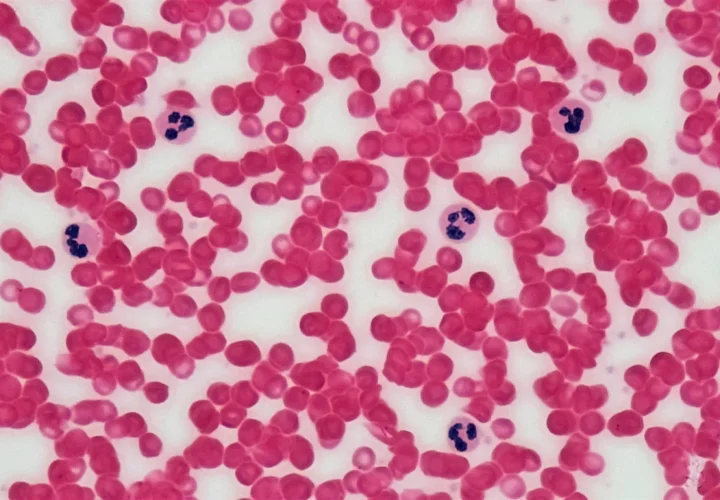
“Normal.” That’s the word a lot of women hear after their first round of hair-loss bloodwork — and it’s also the word that makes them feel like they’re losing their mind, because the shedding, the widening part, the thinner ponytail haven’t gone anywhere. A normal CBC and TSH rules out some things. It doesn’t rule out everything — and that gap between a normal panel and a real explanation is exactly where the overlooked causes of hair loss in women tend to hide.
Here are eight of the most overlooked causes of hair loss in women worth knowing about.
Perimenopause and Changing Hormonal Balance
If you’re in your 40s or 50s and your hair has suddenly started behaving differently, perimenopause deserves a place on this list — though not because every woman entering perimenopause is destined to lose her hair. The relationship between hormones and hair is more complicated than that.
Hair follicles respond to the hormonal environment around them. During the menopause transition, ovarian hormone production becomes increasingly variable before estrogen production ultimately declines, and the relative influence of androgens can become more noticeable as that happens (Olsen, New England Journal of Medicine, 2025). Research on menopause and hair describes changes in density, shaft diameter, and texture during this transition, with female pattern hair loss, telogen effluvium, and other forms of alopecia becoming more apparent for some women during midlife (Olsen, New England Journal of Medicine, 2025).
This is often when a woman tells me, “I’ve never had a hair problem before — why is this happening now?” Sometimes menopause isn’t creating an entirely new problem; it’s revealing a tendency that was already there. A woman may have had mild follicle miniaturization for years without noticing, and as her hormonal environment shifts and she loses some of the density she had in her younger years, the widening part suddenly becomes obvious. Other women experience more diffuse shedding, and some experience both.
This is part of why I’m cautious about pointing to one hormone level and calling it the explanation — hair follicles respond to the overall hormonal environment, genetics, age, and other physiologic factors, not a single isolated lab value (Olsen, New England Journal of Medicine, 2025). Perimenopause is a major piece of the puzzle, but it isn’t the whole puzzle; we’ll go much deeper into hormonal hair changes in a later post in this series.
Iron Stores That Are Low — Even When Your CBC Looks Fine
Iron is one of the first things I think about when a woman presents with significant hair shedding, particularly if she menstruates heavily, has recently changed her diet, or has another reason to be at risk for iron deficiency.
But this is where it gets confusing for a lot of people: you can have a completely normal hemoglobin and still have depleted iron stores, because iron deficiency develops along a spectrum — hemoglobin can stay within the reference range while your body’s iron reserves are already declining. This non-anemic iron deficiency is a recognized entity associated with symptoms including hair loss (Jäger et al., JAMA Network Open, 2024). This is one of the overlooked causes of hair loss in women that’s easy to miss, because two normal-sounding numbers — hemoglobin and TSH — don’t tell the whole story on their own.Ferritin, a marker of stored iron, is the more useful number here (Ning & Zeller, American Society of Hematology, 2019).
But the relationship between ferritin and hair loss isn’t as simple as “low ferritin equals hair loss.”
In one study of non-anemic menstruating women, recent hair loss was significantly correlated with iron deficiency only at lower ferritin thresholds — serum ferritin ≤20 µg/L, and ≤15 µg/L — rather than at higher cutoffs (Beatrix et al., European Journal of Clinical Nutrition, 2022). And there’s no single validated ferritin cutoff for diagnosing “hair-related” iron deficiency: proposed thresholds for iron deficiency itself range widely, from ≤15 through ≤30 to <45 µg/L depending on the guideline (Ning & Zeller, American Society of Hematology, 2019; Ko et al., American Gastroenterological Association, 2020).
So I won’t tell every woman with hair loss that her ferritin needs to be above 70 ng/mL — that number circulates a lot online, but it isn’t a universally validated cutoff for hair-related iron deficiency.
What matters more is looking at the whole iron picture — ferritin, CBC, serum iron, TIBC or transferrin, transferrin saturation, menstrual blood loss, dietary intake, GI symptoms, history of blood donation, pregnancy or recent pregnancy, and any other possible sources of blood loss. A ferritin of 12 tells a very different story than a ferritin of 60, even with an identical hemoglobin, and a ferritin of 60 in a woman with heavy periods and ongoing diffuse shedding deserves a different conversation than the same number in someone with no other risk factors. The lab value and the clinical context both matter — neither one on its own tells the full story.
Thyroid Dysfunction — and Sometimes Thyroid Autoimmunity
Thyroid disease is a classic consideration when evaluating diffuse hair loss, but it still gets overlooked. Both hypothyroidism and hyperthyroidism can affect the hair cycle and lead to changes in texture or increased shedding, and thyroid disease is a recognized trigger for telogen effluvium (Mirmirani & Fu, JAMA, 2021). Thyroid problems don’t always announce themselves clearly — some women have fatigue, weight changes, constipation, temperature intolerance, menstrual changes, or mood changes, while others have symptoms subtle enough to miss entirely.
Thyroid autoimmunity adds another layer. There’s a recognized association between autoimmune thyroid disease and certain forms of alopecia, particularly alopecia areata — a systematic review and meta-analysis of 50 studies found that patients with alopecia areata had higher odds of thyroid dysfunction, positive thyroid autoantibodies, and autoimmune thyroid disease than the general population (Lee et al., Journal of the American Academy of Dermatology, 2019). That’s not a reason to order an extensive autoimmune panel on everyone with hair loss; it’s a reason to let the pattern of hair loss and the rest of the clinical picture guide what actually gets evaluated.
A normal TSH doesn’t automatically rule out every type of thyroid-related hair loss, either — depending on the history, that might mean looking at free thyroid hormone levels, thyroid antibodies, medication use, and whether the rest of the symptom picture actually fits a thyroid disorder. The goal isn’t manufacturing a thyroid diagnosis that isn’t there; it’s not assuming every case of diffuse thinning is simply female pattern hair loss without checking.
PCOS and Androgen Excess
PCOS is another important consideration, particularly in younger women with thinning hair accompanied by other signs of androgen excess — irregular or absent periods, acne, increased facial or body hair, scalp hair thinning, trouble with ovulation or fertility, or metabolic abnormalities (Jiang et al., Current Opinion in Endocrinology, Diabetes, and Obesity, 2022).
Androgen excess can contribute to female pattern hair loss, but the relationship isn’t as simple as “high testosterone causes hair loss.” Female pattern hair loss can occur in women with completely normal androgen levels — in fact, most women with female pattern hair loss have no clinical or biochemical evidence of androgen excess (Olsen, New England Journal of Medicine, 2025). PCOS and female pattern hair loss are associated, but the pathophysiology remains unclear, and female pattern hair loss can be present with normal biochemical androgen markers (Jiang et al., Current Opinion in Endocrinology, Diabetes, and Obesity, 2022). Not every woman with thinning hair has PCOS, and not every woman with PCOS develops scalp hair loss.
What actually makes this worth considering is the combination of symptoms. Losing scalp hair while also developing new facial hair, persistent acne, or irregular periods is a very different clinical picture than gradual widening of the part on its own — and among women with female pattern hair loss plus hirsutism, more than 80% will have hyperandrogenemia (Olsen, New England Journal of Medicine, 2025).
Starting or Stopping Hormonal Birth Control
Hormonal birth control can complicate the hair story too. Some women notice changes in their hair while starting, changing, or stopping hormonal contraception — and the discontinuation of estrogen-containing oral contraceptive pills is a recognized trigger for telogen effluvium (Mirmirani & Fu, JAMA, 2021; Dakkak et al., American Family Physician, 2024).
Not all birth control affects the follicle the same way. Different contraceptives carry different hormonal profiles and androgenic activity, and your individual response depends on your underlying genetics and hormone sensitivity too. For some women, a contraceptive change is followed by a period of increased shedding; for another, hormonal contraception actually suppresses androgen activity and helps stabilize a hormonally influenced hair-loss pattern. So if your hair changed around the time of a contraceptive switch, it’s worth paying attention to that timeline — without assuming the contraceptive itself is automatically “bad for your hair.” The relationship is more individual than that.
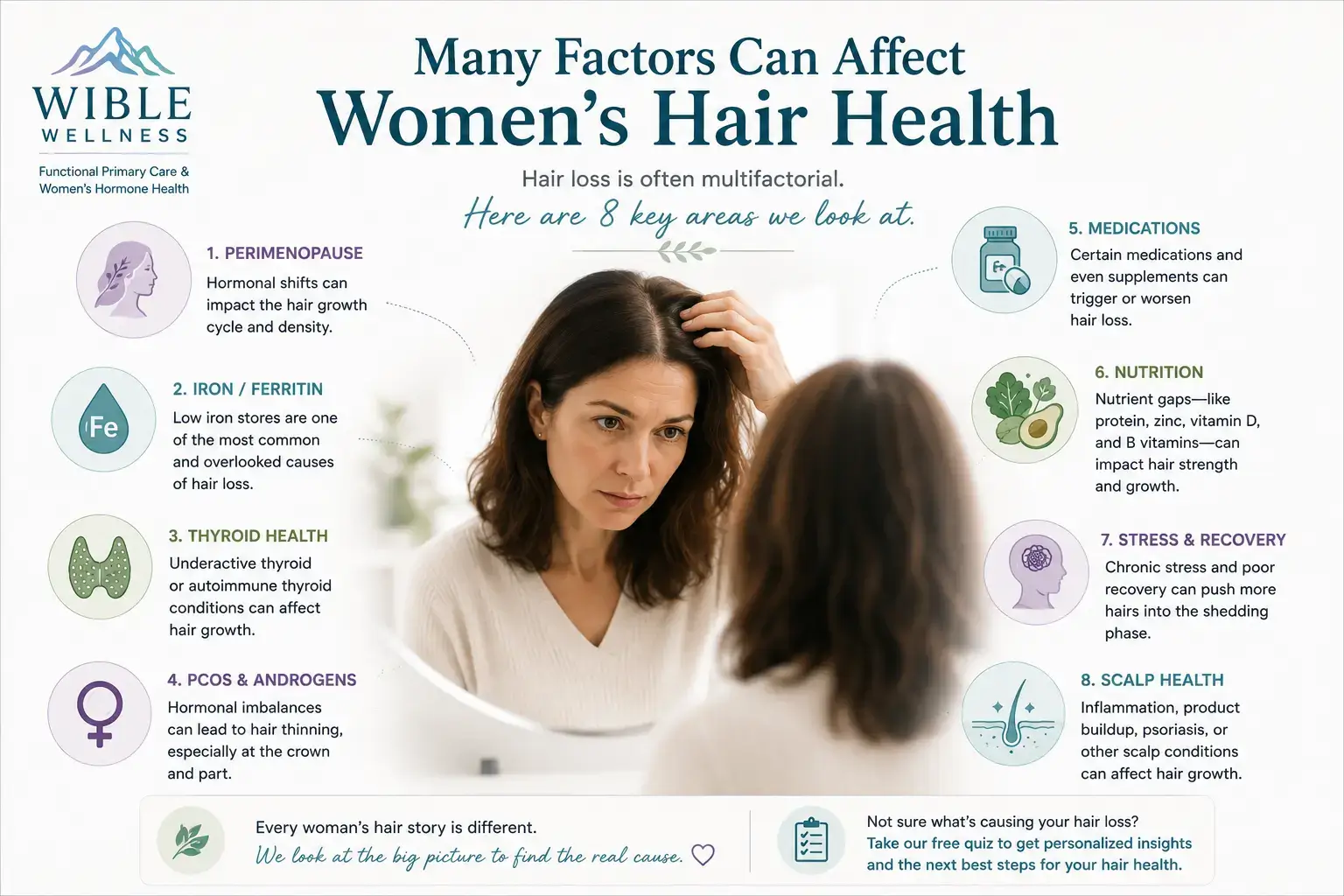
Chronic Stress, Poor Recovery, and the Hair Cycle
You’ve probably heard that stress causes hair loss. It’s true, but the phrase gets thrown around so casually it’s nearly lost its meaning — we’re not talking about one stressful Tuesday leading to bald spots on Wednesday.
Hair follicles respond to significant physiologic stressors, and one classic result is telogen effluvium, which shows up with a delay because the follicles don’t immediately release the hair when the trigger occurs — shedding typically begins 2 to 4 months after the inciting event (Mirmirani & Fu, JAMA, 2021; Dakkak et al., American Family Physician, 2024). That means chronic stress can be relevant, particularly alongside poor sleep, under-eating, rapid weight loss, intense exercise without adequate recovery, illness, emotional trauma, or major life changes — stress can also indirectly affect hair by changing your eating habits, sleep, menstrual cycle, and overall physiologic state.
This is why I’m cautious about telling someone “it’s just stress” — that phrase can feel dismissive, and stress may well be contributing, but it’s still worth asking what’s happening underneath it: whether you’re eating enough protein, whether you’ve lost weight, whether your periods have gotten heavier or less predictable, and whether the shedding started a few months after a major life event. Those questions tend to be far more useful than the label “stress” on its own.
Medications Can Sometimes Be the Missing Piece
Medication-induced hair loss is easy to overlook because the medication is usually treating an entirely different problem. Many medications have been associated with hair shedding, and drug-induced alopecia commonly occurs through telogen effluvium — with timing that can be delayed by 2 to 4 months, making the connection even harder to recognize (Tosi et al., Drug Safety, 1994; Mirmirani & Fu, JAMA, 2021).
Medications reported to contribute to hair shedding include beta blockers, some antidepressants, lithium (the most common medication cause) and other mood stabilizers such as valproate, anticoagulants such as warfarin, retinoids, and isoniazid (Mirmirani & Fu, JAMA, 2021; Dakkak et al., American Family Physician, 2024). Beta blockers are a good example — propranolol and metoprolol in particular have been associated with telogen effluvium, and alopecia is listed as an adverse reaction on the propranolol label (Dakkak et al., American Family Physician, 2024; U.S. Food and Drug Administration, n.d.) — and retinoids are another, capable of causing generalized shedding and thinning in some people (Tosi et al., Drug Safety, 1994).
None of that means you should stop a medication because you suspect it’s behind your hair loss — never stop a prescribed medication without talking to the clinician who prescribed it. Drug-induced hair loss is usually reversible after the treatment is stopped (Tosi et al., Drug Safety, 1994). What’s worth looking at instead is the timeline: whether the medication started shortly before your hair changed, whether the dose was increased, or whether the shedding began a few months after either change. The medication isn’t always the whole story, but it can be an important piece of it.
Nutrition, Weight Loss, Hair Practices, and Scalp Health
This last category is intentionally broad, because several seemingly unrelated problems can affect the hair in similar ways.
Nutritional gaps. Hair production requires adequate energy and nutrients, and malnutrition and rapid weight loss are recognized triggers of telogen effluvium (Mirmirani & Fu, JAMA, 2021). Inadequate protein, iron, zinc, or other nutrient intake can contribute to noticeable hair loss — particularly with restrictive diets, eating disorders, major dietary changes, malabsorption, or inadequate calorie intake.
More supplements aren’t automatically better. The hair supplement industry has created the impression that if a little biotin, zinc, selenium, or vitamin A helps, more must help more. It doesn’t.
- Excessive zinc supplementation can interfere with copper absorption and induce copper deficiency, with attendant anemia and neutropenia — evidence of induced copper deficiency has been reported at intakes of 100–300 mg/day, and the adult tolerable upper intake level is 40 mg/day outside of specific medical supervision (Fosmire, American Journal of Clinical Nutrition, 1990; Sandstead, American Journal of Clinical Nutrition, 1995).
- Excessive selenium intake, above the adult upper limit of 400 µg/day, is itself associated with hair loss among other effects; alopecia is a hallmark of selenosis, and in the SELECT trial, 200 µg/day of selenium significantly increased the risk of alopecia (van Zuuren et al., Cochrane Database of Systematic Reviews, 2013; Winther et al., Nature Reviews Endocrinology, 2020).
- Retinoids (vitamin A), in turn, can cause hair loss as well (Tosi et al., Drug Safety, 1994). If you’re taking a multivitamin, a “hair vitamin,” a prenatal, a collagen product with added nutrients, and several individual supplements at once, it’s worth adding up the total dose rather than assuming each product is simply helping on its own.
Rapid or crash weight loss. Significant calorie restriction and rapid weight loss are classic setups for increased shedding (Mirmirani & Fu, JAMA, 2021). Your body has limited resources, and hair production matters for appearance but isn’t a survival priority — so when you’re losing weight quickly, eating substantially less, or not getting enough protein and micronutrients, the hair cycle responds. That’s one reason someone can finish a successful weight-loss phase and then wonder, a few months later, why their hair is suddenly shedding. The delay can make the connection easy to miss.
Tight hairstyles and traction alopecia. Your hairstyle can matter more than you’d think. Repeated tension from tight ponytails, buns, braids, cornrows, extensions, or weaves can cause traction alopecia — early on, easing up on the tension may allow recovery, but prolonged and repeated tension can eventually damage the follicle permanently and result in scarring (Afifi et al., Pediatric Dermatology, 2021; Imhof et al., American Academy of Pediatrics, 2020). A simple rule of thumb: if your hairstyle hurts, it’s too tight. Pain, stinging, crusting, broken hairs around the hairline, or progressive recession are all worth paying attention to.
Scalp conditions. Finally, don’t overlook the scalp itself. Psoriasis, fungal infections, inflammatory scalp disorders, and alopecia areata can all cause hair loss without looking anything like classic female pattern thinning. Scalp psoriasis, for example, can cause hair loss — most commonly in lesional skin, sometimes as a generalized telogen effluvium, with regrowth in most cases but rarely scarring (George et al., Clinical and Experimental Dermatology, 2015). Alopecia areata tends to look different altogether — sudden, smooth, round or oval patches, sometimes with itching, tingling, or burning. Hair loss accompanied by pain, burning, significant itching, redness, scaling, sores, pustules, or shiny patches where follicles seem to have disappeared calls for an actual scalp exam, not a handful of supplements.
Why These Overlooked Causes of Hair Loss in Women Get Missed
Normal bloodwork is reassuring, but it doesn’t mean nothing is happening. Hair loss gets diagnosed primarily by looking at the pattern, timeline, scalp, medications, medical history, family history, and — when it’s appropriate — laboratory testing; for diffuse shedding, the standard targeted labs are TSH, ferritin, and 25-hydroxyvitamin D (Mirmirani & Fu, JAMA, 2021). There’s no single blood test that can hand you the answer “this is why you’re losing your hair,” and ordering every possible lab isn’t automatically better medicine.
The evaluation should follow the clues instead: a woman with heavy periods and diffuse shedding needs a different workup than a woman with a widening part and a strong family history of female pattern hair loss; a woman with irregular periods and new facial hair needs a different conversation than someone whose shedding began three months after major surgery; and a woman with scalp burning and patchy loss needs a different approach entirely. The pattern comes first, and the testing exists to answer the questions that pattern raises — not the other way around.
The Bottom Line
There are plenty of reasons your hair can change that have nothing to do with simply getting older. Perimenopause, depleted iron stores, thyroid dysfunction, PCOS, hormonal contraception, significant stress, medications, nutritional problems, rapid weight loss, traction, and scalp conditions can all enter the picture depending on what your hair is actually doing — and often it’s not just one of them.
You can have genetic follicle miniaturization plus telogen effluvium after a major stressor. You can have perimenopausal hormonal changes plus an underlying nutritional problem. You can have a perfectly normal ferritin and still have female pattern hair loss. That combination of possibilities is exactly why the overlooked causes of hair loss in women rarely fit into one lab panel or one diagnosis — and why I don’t believe in a one-size-fits-all hair-loss workup.
If you’ve been told your labs are normal but your hair is clearly changing, that’s not a reason to panic or to start taking every hair supplement you can find — it’s a reason to look at the whole picture. And if you’ve worked through the common causes, the overlooked causes here, and the obvious explanations, and your hair is still thinning, the investigation is about to get more interesting: in the next post, we’ll go beyond the standard hair-loss workup and look at some of the deeper factors worth considering when the usual answers don’t quite explain what’s happening.
Disclaimer: This post is for educational purposes only and does not constitute direct medical advice. Always consult your healthcare provider regarding personal symptoms.
References
Afifi, L., Oparaugo, N. C., & Hogeling, M. (2021). Review of traction alopecia in the pediatric patient: Diagnosis, prevention, and management. Pediatric Dermatology, 38(6), 1436–1443. https://onlinelibrary.wiley.com/doi/10.1111/pde.14773
Beatrix, J., Piales, C., Berland, P., Marchiset, E., Gerbaud, L., & Ruivard, M. (2022). Non-anemic iron deficiency: Correlations between symptoms and iron status parameters. European Journal of Clinical Nutrition, 76(6), 835–840. https://www.nature.com/articles/s41430-021-01047-5
Dakkak, M., Forde, K. M., & Lanney, H. (2024). Hair loss: Diagnosis and treatment. American Family Physician, 110(3), 259–267. https://www.aafp.org/afp/2024/0900/hair-loss
Fosmire, G. J. (1990). Zinc toxicity. The American Journal of Clinical Nutrition, 51(2), 225–227. https://pubmed.ncbi.nlm.nih.gov/2407097/
George, S. M., Taylor, M. R., & Farrant, P. B. (2015). Psoriatic alopecia. Clinical and Experimental Dermatology, 40(7), 717–721. https://pubmed.ncbi.nlm.nih.gov/26202646/
Imhof, R. L., Davis, D. M. R., & Tollefson, M. M. (2020). Hair loss. Pediatrics in Review, 41(11), 570–584. https://publications.aap.org/pediatricsinreview/article-abstract/41/11/570/35358/Hair-Loss?redirectedFrom=fulltext
Jäger, L., Rachamin, Y., Senn, O., & Rosemann, T. (2024). Ferritin cutoffs and diagnosis of iron deficiency in primary care. JAMA Network Open, 7(8), e2425692. https://jamanetwork.com/journals/jamanetworkopen/fullarticle/2821953?utm_source=openevidence&utm_medium=referral
Jiang, V. S., Hawkins, S. D., & McMichael, A. (2022). Female pattern hair loss and polycystic ovarian syndrome: More than just hirsutism. Current Opinion in Endocrinology, Diabetes, and Obesity, 29(6), 535–540. https://pubmed.ncbi.nlm.nih.gov/36226726/
Ko, C. W., Siddique, S. M., Patel, A., Harris, A., Sultan, S., Altayar, O., & Falck-Ytter, Y. (2020). AGA clinical practice guidelines on the gastrointestinal evaluation of iron deficiency anemia. Gastroenterology, 159(3), 1085–1094. https://www.gastrojournal.org/article/S0016-5085(20)34847-2/fulltext
Lee, S., Lee, Y. B., Kim, B. J., & Lee, W. S. (2019). Screening of thyroid function and autoantibodies in patients with alopecia areata: A systematic review and meta-analysis. Journal of the American Academy of Dermatology, 80(5), 1410–1413. https://pubmed.ncbi.nlm.nih.gov/30447313/
Mirmirani, P., & Fu, J. (2021). Diagnosis and treatment of nonscarring hair loss in primary care in 2021. JAMA, 325(9), 878–879. https://jamanetwork.com/journals/jama/article-abstract/2776865?utm_source=openevidence&utm_medium=referral
Ning, S., & Zeller, M. P. (2019). Management of iron deficiency. Hematology. American Society of Hematology Education Program, 2019(1), 315–322. https://ashpublications.org/hematology/article/2019/1/315/422602/Management-of-iron-deficiency
Olsen, E. A. (2025). Hair loss in women. The New England Journal of Medicine, 393(15), 1497–1508. https://www.nejm.org/doi/full/10.1056/NEJMcp2412146?utm_source=openevidence
Sandstead, H. H. (1995). Requirements and toxicity of essential trace elements, illustrated by zinc and copper. The American Journal of Clinical Nutrition, 61(3, Suppl.), 621S–624S. https://pubmed.ncbi.nlm.nih.gov/7879727/
Tosi, A., Misciali, C., Piraccini, B. M., Peluso, A. M., & Bardazzi, F. (1994). Drug-induced hair loss and hair growth: Incidence, management and avoidance. Drug Safety, 10(4), 310–317. https://pubmed.ncbi.nlm.nih.gov/8018303/
U.S. Food and Drug Administration. (n.d.). Propranolol hydrochloride [Prescribing information]. https://dailymed.nlm.nih.gov/dailymed/drugInfo.cfm?setid=25f9b9a3-7b0b-48d2-a458-c613bedc7cab
van Zuuren, E. J., Albusta, A. Y., Fedorowicz, Z., Carter, B., & Pijl, H. (2013). Selenium supplementation for Hashimoto’s thyroiditis. The Cochrane Database of Systematic Reviews, 2013(6), CD010223. https://www.nature.com/articles/s41574-019-0311-6
Winther, K. H., Rayman, M. P., Bonnema, S. J., & Hegedüs, L. (2020). Selenium in thyroid disorders — essential knowledge for clinicians. Nature Reviews Endocrinology, 16(3), 165–176. https://www.cochranelibrary.com/cdsr/doi/10.1002/14651858.CD010223.pub2/full